
Sullair · Product design
Finding a file should not be an investigation.
A digital asset management platform that turns files, permissions and administrative decisions into a system people can navigate with confidence.
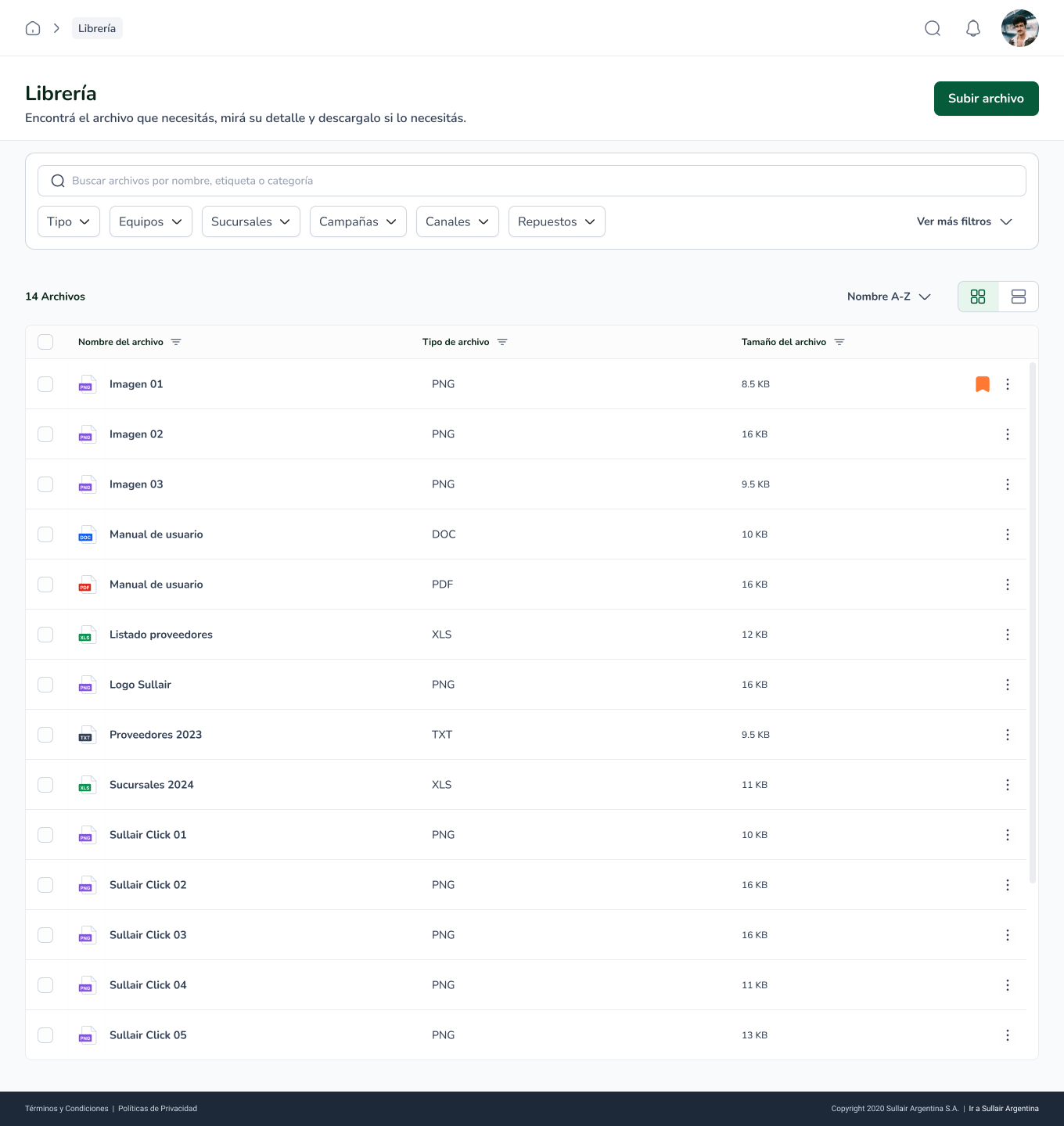
A library is not just a big folder.
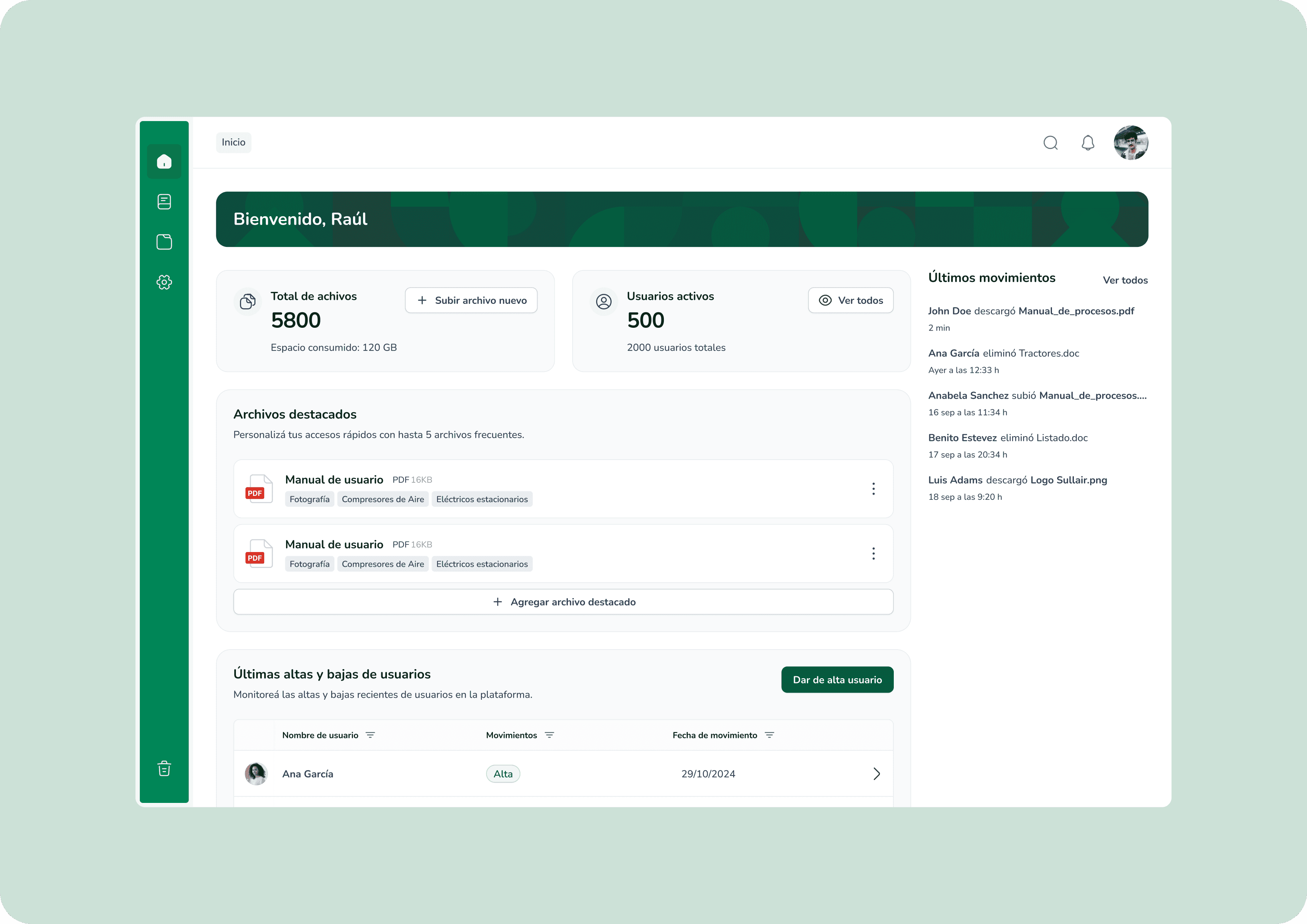
I joined once much of the research and user-story work was already defined. My contribution was turning that material into a coherent product: priorities, states, rules, hierarchy and real journeys across a growing library of digital assets.
Find, understand and act.
The library is the system's core. Search, results and tag filters let someone move from “I roughly know what I need” to a specific file without relying on another person's memory. Asset detail, download, sharing, editing, selection and removal were designed as parts of one continuous relationship with content.
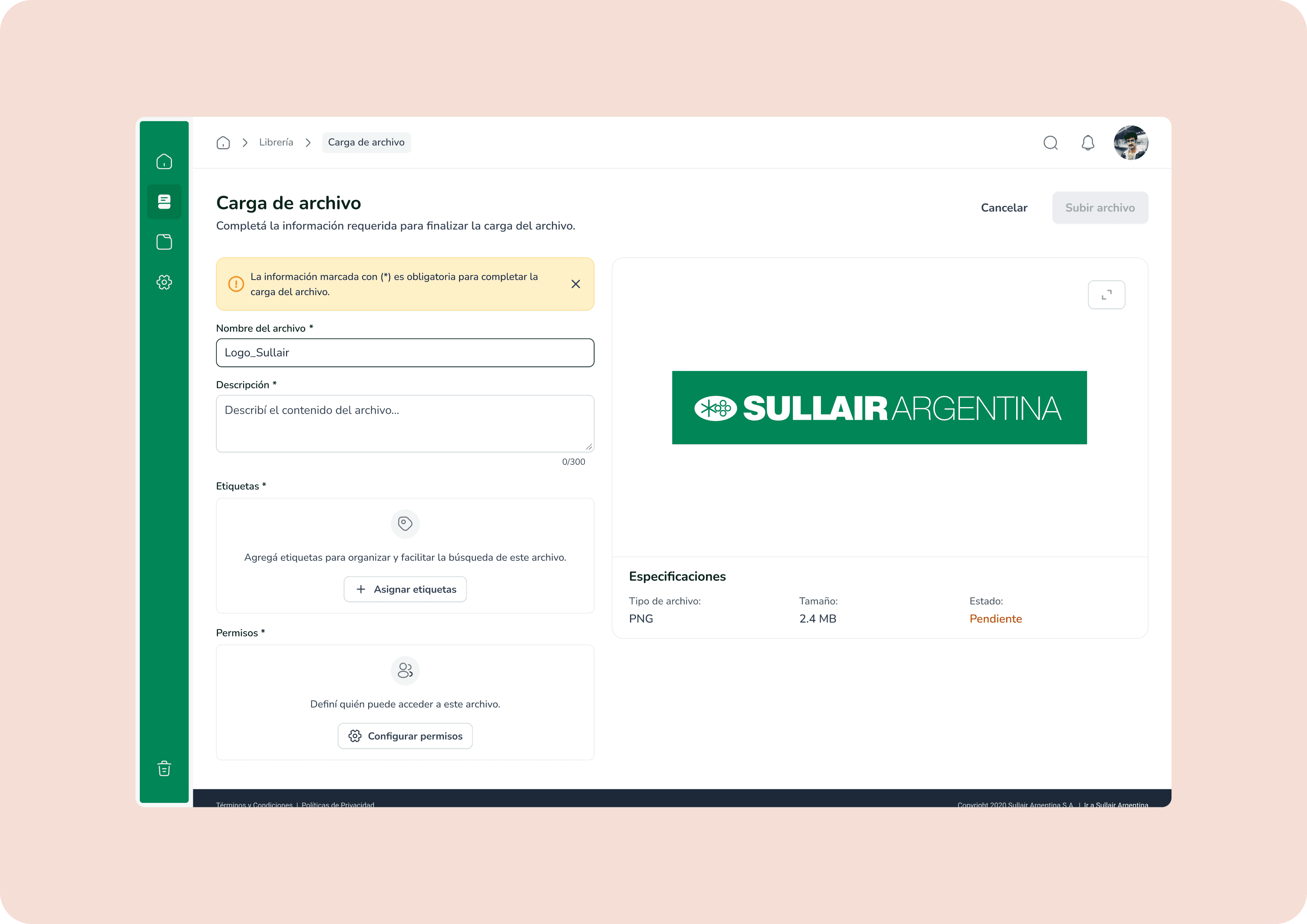
Uploading also creates future order.
Upload could not be a simple button. The flow asks for the metadata and tags that make an asset findable and manageable later, balancing enough context to preserve the system without turning a routine task into an endless form.
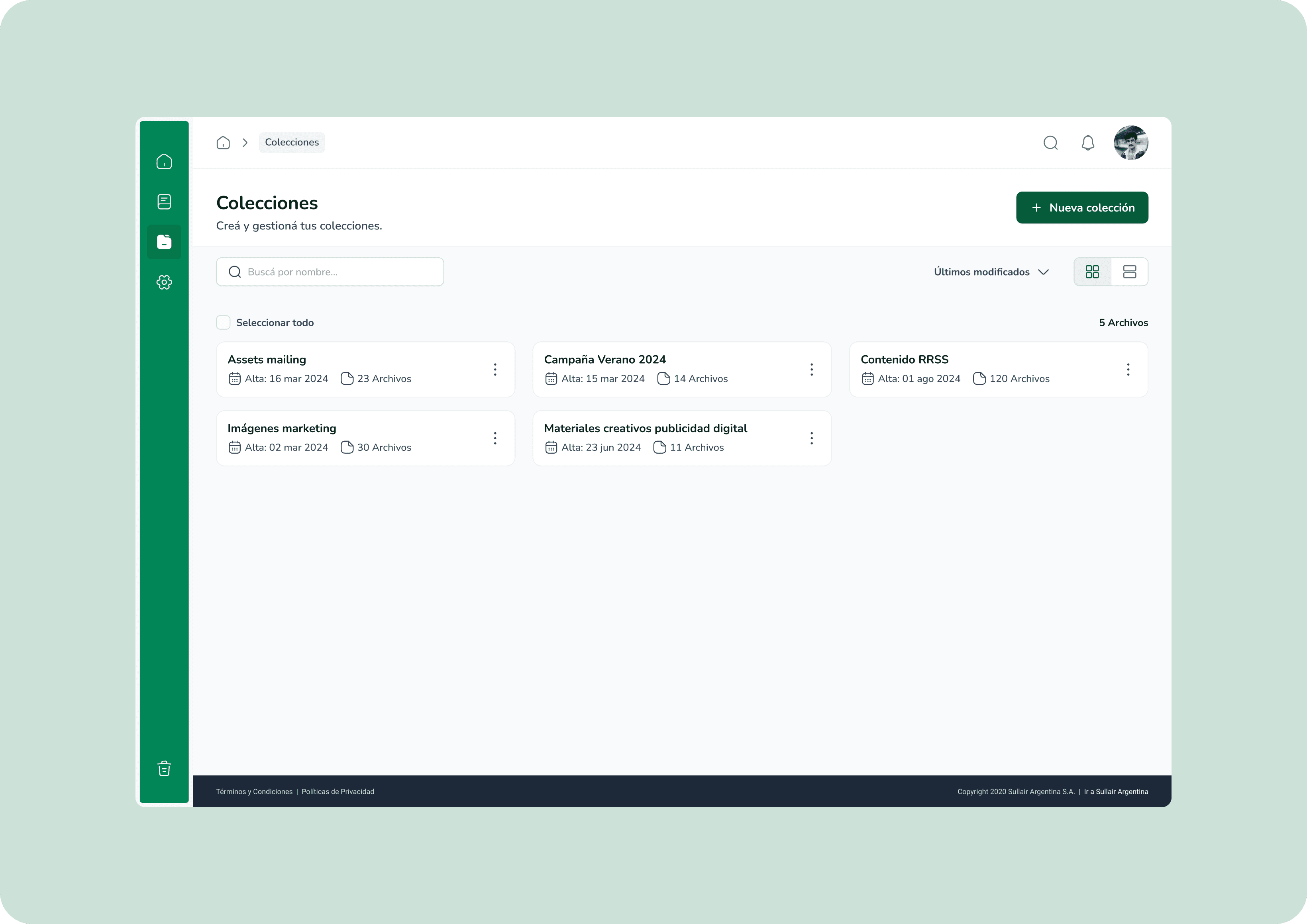
Organisation needs visible rules.
Collections support work around a campaign, presentation or review without changing the underlying library. Administration covers tags, users, groups and recovery from the trash, making structural actions understandable and reversible when appropriate.
My contribution
I helped resolve the flows that connect exploration, upload, organisation and administration: what information appears at each moment, which actions are enabled, what can be undone and how system states are explained. The result is a continuous experience for distinct roles and tasks in DAM.